&geometry(294x90) "KMG Communications")
Evidence into Practice 4: The Future Landscape
)
Four-part 'Evidence into Practice' series
A thought leadership series from KMG Communications exploring how expert communication transforms complex evidence into informed decisions, meaningful action and better outcomes across healthcare, research, government and industry.
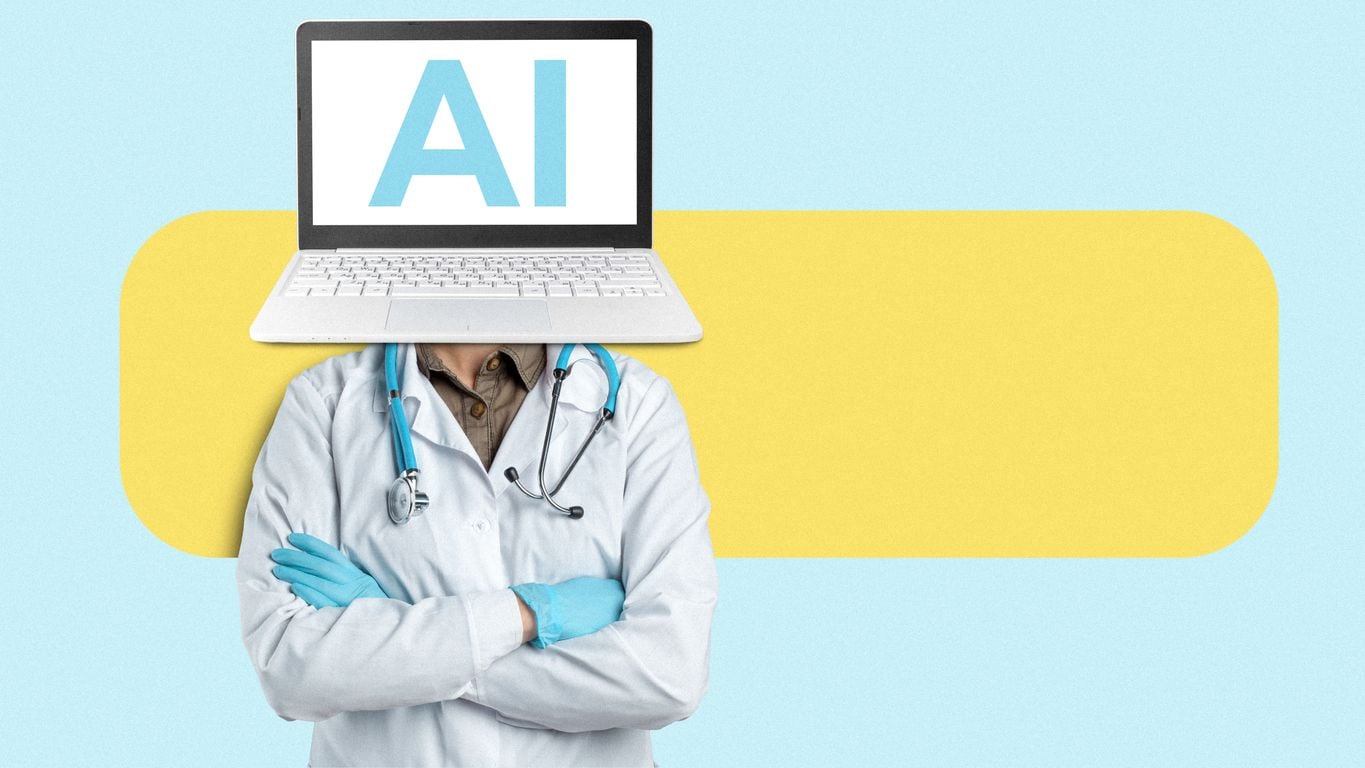
Part 4: From Information to Influence - The Future of Evidence Translation in the Age of AI
Why the next generation of healthcare improvement will depend as much on communication as it does on evidence
How clear communication transforms evidence into better decisions across healthcare, government and research.
Throughout this Evidence into Practice series, we've explored a simple but important idea. In Part 1, we argued that communication has become a strategic capability because evidence only creates value when it informs decisions. In Part 2, we examined why strong evidence often fails to change clinical practice, despite widespread access to high-quality research. In Part 3, we explored how thoughtfully designed educational resources and academic detailing can help bridge the gap between evidence and everyday clinical decision-making.
Collectively, these articles point to a broader conclusion. Healthcare's greatest challenge is no longer generating evidence. It is helping people use it. As healthcare becomes increasingly complex - and artificial intelligence rapidly changes how information is created, accessed and shared - the importance of evidence translation will only continue to grow. In this final article of the series, we look ahead - to consider how AI changes evidence translation and why human communication becomes even more valuable.
We are entering the age of abundant information
For much of modern healthcare, accessing and publishing information was labour-intensive. Accessing journal articles required library subscriptions. Clinical guidelines were updated relatively infrequently. Literature reviews could take months to complete. Today, the situation has reversed. Healthcare professionals now face an almost unlimited supply of information. Clinical evidence, systematic reviews, digital decision-support tools, podcasts, webinars, AI-generated summaries and international guidelines are available within seconds.
The challenge is no longer finding information. It is deciding which information deserves attention. In other words, the bottleneck has shifted from evidence generation to evidence interpretation.
AI changes access - not judgement
Artificial intelligence represents one of the most significant developments in health communication in decades. It can summarise research papers, identify emerging themes across large evidence bases, draft educational content and assist with literature searching at remarkable speed. These capabilities have enormous potential. But they also highlight an important distinction. AI can generate information. It cannot assume responsibility for judgement.
Clinical communication requires more than summarising evidence. It requires understanding context, balancing competing priorities, recognising uncertainty and appreciating how different audiences interpret information. The future therefore belongs neither to AI alone nor to traditional approaches that ignore technological change. It belongs to organisations that combine intelligent technology with expert human judgement.
Evidence translation is becoming a specialist discipline
Historically, communication has often been viewed as the final stage of a project. Once the research was complete, someone would write the report. Once the policy was approved, someone would prepare the implementation materials. Increasingly, that model is changing. Organisations are recognising that evidence translation should be embedded throughout the life of a project - from research design and stakeholder engagement through to implementation, evaluation and continuous improvement.
This requires specialised skills that extend well beyond writing. It involves understanding implementation science, behaviour change, adult learning, health literacy, stakeholder communication and knowledge translation. In this environment, communication becomes a strategic function rather than an administrative activity.
Communication is becoming more personalised
One-size-fits-all educational resources are becoming increasingly difficult to justify. Clinicians working in metropolitan hospitals, rural general practice, community health services and aged care settings often face different challenges despite working from the same evidence base. Future educational resources are therefore likely to become increasingly tailored.
Digital technologies will allow educational content to be adapted according to professional role, experience, local practice environment and learning needs. The underlying evidence may remain consistent. The communication will become increasingly personalised. This represents an exciting opportunity to improve both engagement and implementation.
The organisations that succeed will focus on trust
Ironically, as technology makes information easier to generate, trust becomes more valuable. Healthcare professionals, policymakers and patients will increasingly ask:
- Can I trust this information?
- Has the evidence been interpreted appropriately?
- Is the communication balanced?
- Are the recommendations transparent?
- Does this resource acknowledge uncertainty?
Organisations that consistently provide clear, balanced and evidence-informed communication will become trusted sources in an increasingly crowded information environment. Trust may become one of the most important competitive advantages in healthcare communication.
Better communication leads to better systems
Evidence translation is often discussed in terms of individual clinician behaviour. Its impact is much broader. The clear communication of evidence influences organisational decision-making, supports policy implementation, improves interdisciplinary collaboration, strengthens stakeholder engagement and helps health systems adapt more effectively to change.
When communication improves, organisations often experience fewer misunderstandings, greater consistency, more informed discussions and more confident decision-making. The benefits extend well beyond individual educational resources. They influence the performance of the entire system.
The future belongs to evidence that is understood
Healthcare has invested enormous effort in producing better evidence. The next frontier is ensuring that evidence reaches the people who need it - in forms they can understand, trust and apply. That is the essence of evidence translation. Whether supported by implementation science, academic detailing, digital education or artificial intelligence, the objective remains the same: Helping good evidence become better decisions.
Research that sits unread on a shelf improves nothing. Clinical guidelines that are never implemented improve nothing. Reports that fail to influence policy improve nothing. Evidence creates its greatest value only when it changes practice. And that journey begins with communication.
Key takeaways
- AI is transforming how evidence is accessed, but not how professional judgement is exercised.
- The greatest challenge is no longer generating evidence but translating it into practical action.
- Evidence translation is emerging as a specialised capability combining communication, implementation science and behaviour change.
- Trust will become increasingly valuable as AI-generated information becomes more common.
- Organisations that invest in evidence translation will be better positioned to improve decision-making, implementation and patient outcomes.
--
Where to next?
This concludes the first Evidence into Practice series, but the conversation is far from over. Our future articles will explore topics including clinical guideline development, implementation science, academic detailing, health literacy, behavioural insights, AI-assisted synthesis of evidence and the evolving role of communication in improving healthcare.
While evidence continues to evolve, one principle remains constant: Evidence makes an impact on healthcare only when people understand it well enough to apply it.
Frequently Asked Questions (FAQs)
From Information to Influence: The Future of Evidence Translation in the Age of AI
Q: What is evidence translation?
A: Evidence translation is the process of converting research findings into clear, practical and trustworthy communication that supports better decisions. It helps clinicians, policymakers and organisations understand, apply and implement evidence in real-world settings.
Q: How is artificial intelligence changing healthcare communication?
A: AI is making it faster to search, summarise and generate health information. While these technologies improve access to evidence, they do not replace the human judgement needed to interpret research, understand context and communicate recommendations responsibly.
Q: Why is human expertise still important in the age of AI?
A: Effective evidence translation requires more than summarising information. It involves critical appraisal, understanding uncertainty, recognising audience needs and balancing scientific evidence with practical decision-making. These are areas where human expertise remains essential.
Q: Why will trust become more important as AI develops?
A: As AI-generated content becomes increasingly common, healthcare professionals will place even greater value on communication that is transparent, balanced and evidence-based. Organisations that consistently provide trustworthy information are more likely to influence practice and policy.
Q: What skills are needed for effective evidence translation?
A: Evidence translation combines medical writing, health communication, implementation science, behaviour change, stakeholder engagement and educational design. Together, these disciplines help ensure that evidence leads to meaningful improvements in healthcare.
Q: How can KMG Communications help organisations translate evidence into action?
A: KMG Communications partners with healthcare organisations, researchers, government agencies and industry to transform complex evidence into clear, credible and actionable communication. Our services include medical writing, educational resource development, academic detailing materials, policy communication, implementation support and strategic health communication.
Need help translating complex evidence into clear, actionable communication?
KMG Communications partners with government agencies, healthcare organisations, researchers and professional bodies to develop evidence-based documents, educational resources and implementation materials that support better decision-making. Whether you're developing clinical guidelines, educational resources, policy documents or implementation tools, we can help transform complex evidence into communication that informs, engages and drives meaningful change.
Explore our services or get in touch to discuss your next project.
)
| Tags:Latest NewsHealth & Medical Writing GuidanceAcademic Detailing Essentials |